
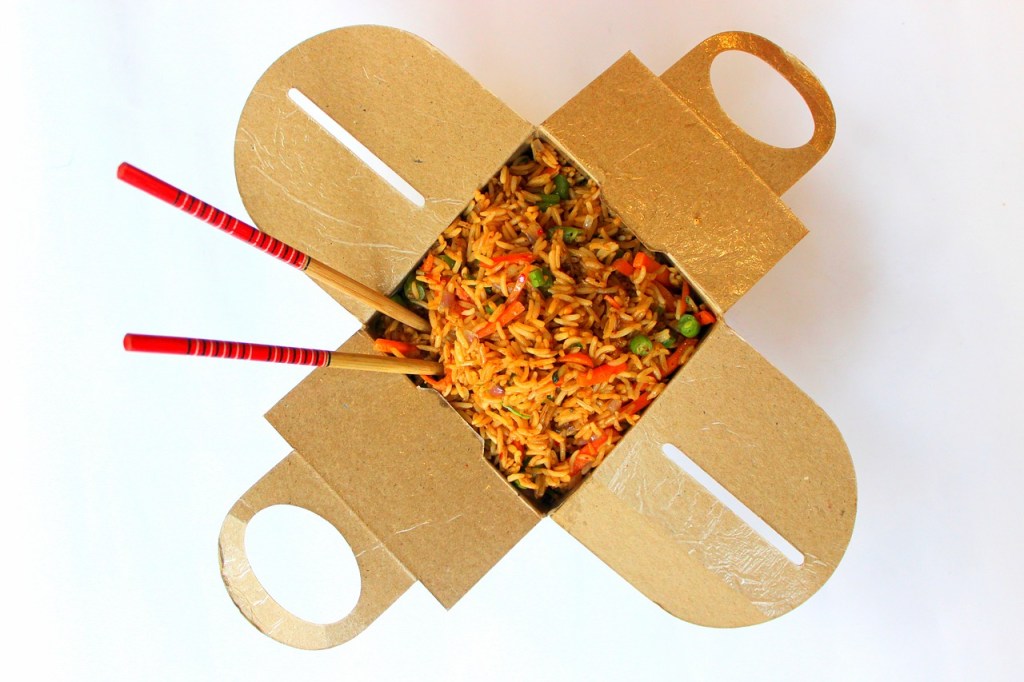

I was washing up after my evening meal recently and started thinking about the relative costs of home-cooked food ( I have written about the latter in another blog [https://writeon.live/2018/11/19/what-constitutes-a-home-cooked-meal/ ]) compared with convenience options, such as takeaway (as we refer to it in the UK) meal boxes, and so on.
Just to clarify, I’m not planning to do calculations on this (for now) – just refer to the factors that would contribute to them. some of this would be difficult anyway, because you have to be sure that you’re comparing like with like, and there are so many variables to take into account.
It occurred to me that maybe there are items (or factors) that aren’t generally taken into account when calculating the costs of each type of meal.
I will start with the home-cooked meal.
- Shopping
- Cost of raw ingredients
- Time taken in preparation
- Cost of fuel
If you shop for ingredients, you have to get to the shop (transport) and take time doing it. As time = money, I’m including it here.
If you choose to do your shopping online, you eliminate the cost of transport, and the time is reduced, however, you have to pay a charge for the delivery, so that is an additional cost.
All the food you buy costs money (unless it’s been given to you, or you got it from a food bank). If an ingredient is purchased, and not all of it is used, some may be wasted, but you still pay the full cost of it.
You will take some time to prepare the food (unless it’s something you eat raw, such as fruit, or you eat it straight from the fridge, like yoghurt, etc.) so the cost of your labour must be factored in.
Cooking the food will consume fuel/energy (gas, electricity, etc.) so this must be included in the cost.
if you make more food than you need and then don’t eat it before it needs to be disposed of, then that’s clearly money wasted. However, leftovers that are saved for future lunches or dinners, or portioned up and frozen for meals further down the line will save money (although if I were to be pedantic, I would have to include the cost of storing the food in the fridge or freezer, as well as the space taken up by it, and the cost of fuel used to defrost and reheat the leftovers).
Menu boxes
These have become quite popular in recent years. For your payment (plus the cost of delivery) you receive a box containing everything you need to prepare a specific meal, along with the recipe. The quantities have already been measured out for the number of portions required, so there won’t be any wastage, especially of expensive and/or rarely used ingredients (unless you don’t like the meal once prepared, or make a hash of the preparation!)
Some modern kitchens don’t contain a large amount of storage space, so not having to make room for foods that aren’t often used may be a factor in some people’s choices. Also, the fact that the menu box is a one-off meal arguably promotes variety and minimises the likelihood of boredom from having the same foods recycled repeatedly.
Ready Meals
These are the meals purchased from the supermarket etc. Usually, they just need heating through in the oven or microwave. The costs are just the meal and the cost of the heating. Some ready meals (such as those targeted at older people) are delivered. I’m unsure if there’s a delivery charge for them. There are versions of these meals that you don’t have to freeze, and which have a long shelf life.
Takeaways
The costs involved here are those of the food and its delivery. If the meal needs to be reheated, that adds a further cost. The cost per portion will increase proportionately if you don’t eat all of the food.
Can you put a cost on the nutritional value of food?
One of the ways people justify their preference for preparing and cooking their own food at home is the superior nutritional value of the meals. There is some evidence to support this; processed foods often contain higher levels of salt, sugar, and saturated fats, as well as the inevitable preservatives, etc. This is not to claim that food people prepare and cook themselves will be superior on these metrics, just that there is a strong probability that it will.
There is plenty of evidence that a poor diet has negative impacts on health, so the answer to that question for me would be yes, but more in terms of philosophy than reality.
I’m not trying to convince anyone, including myself, in this piece, so there is no conclusion. Everyone has to make their own decisions, based on the amount of time, money, etc. at their disposal.




























 Write on